

Vanille Planifolia Propaganda
Newsletter #71: don't buy this perfume

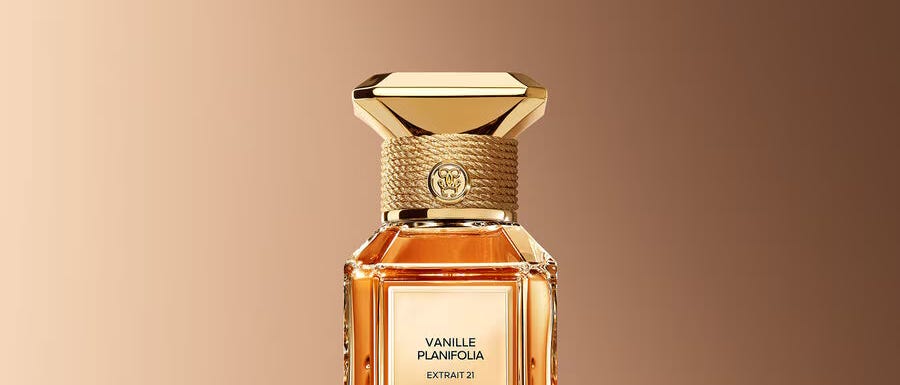
How much would you pay for a bottle of perfume?
This is a question I can’t answer without a hundred qualifiers. Well, you see, it depends - is it a designer perfume, artisan, a splash from the chemist? Is the perfume rare, reformulated, discontinued? Are we talking about a 15ml travel spray, or a decant, or 50ml, or 100? Am I paying for the stuff in the bottle or the label and the box and the brand? Where does the value live?
So the answer changes with the circumstances. But I know how much I wouldn’t pay for a perfume. I wouldn’t pay $500. I don’t care if it is the rarest of rare bottles, if it was formulated using the most precious materials at the perfume organ of Francois Coty himself. There’s no perfume on earth that should cost that much, and if it does it had better be an artisanal perfume that actually does use a relatively high amount of natural, finite materials - the shrinking lump of ambergris, the unharvestable oud.
But a mass market perfume, a designer perfume, that costs more than $500? The concept would make me laugh if it wasn’t so offensive. Every year there are more of these monstrosities filling our shelves and our social media feeds. When did it become normal to see a bottle of perfume that costs five hundred, six hundred dollars? And why are people buying them?
I mean, I can tell you. I can trace the path as clearly as a long road on a hot summer’s day. L’Artisan Parfumer bleeds into Serge Lutens and then Frederic Malle and the rise of niche leading to the counter-reformation of ‘exclusive’ lines from traditional designer houses. The consolidation of capital in the beauty industry letting the beasts of LVMH and L’Oreal cannibalise the entire industry. The bubble feeding and feeding on itself until we get here. To Vanille Planifolia Extrait 21.
If you have even breathed near perfume related content on the internet before, you have heard of Vanille Planifolia. Over the past six months there has been a social media blitzkrieg of content around this perfume. It is a release from the house of Guerlain. It is currently priced at $960AUD for 50ml.
There are die hard lovers of perfume who believe that the true Guerlain, the house of Jacques and Jicky and the Guerlinade, died in 1994 when LVMH sunk its teeth into the acquisition. I think it’s a good thing that we still have Guerlain, but have to admit that the most noble house’s situation does seem to get grimmer and grimmer by the year.
Instead of excelling in the kind of mid range designer masterpieces that defined the 20th century, Guerlain is following the path of all other houses, bifurcating into cheap and accessible lines like the Aqua Allegoria range that can be purchased at any mall of decent size, and Exclusive lines that only god and recently crowned trillionares ever have any hope of affording.
For Guerlain this is the L'Art & La Matière line, which has within it an even more exclusive Extraits line, which is where we find Vanille Planifolia. The description of this scent is as indulgent and despicable as you could expect:
The luxury perfume’s lucky number? 21, since it’s composed of straight-from-Madagascar vanilla planifolia that’s manually cold-soaked in alcohol for exactly three weeks, but not before it’s cut with perfumer Jacques Guerlain’s original knife. Said vanilla is hand-pollinated and hand-harvested, too, meaning a dedicated team of Guerlain experts assembles to complete a single bottle of the fragrance, all for the sake of you smelling utterly divine. (x)
Cut with Jacques Guerlain’s original knife. Oh, good.
Perfume copy is, by nature, some of the most odious writing on the planet. It is a place where authenticity goes to die a slow and painful demise. This is especially tragic when there are actually interesting things to be said about any given material or formula or history for a fragrance.
For example, is there any point in raising the fact that nearly all vanilla is hand pollinated and hand harvested, due to immense technical difficulty in the cultivation process? Or the fact that the method of hand pollinating vanilla was discovered by an enslaved boy named Edmond Albius, who had the credit stolen by a Frenchman and was only acknowledged for the immense impact he had on the fact we even have vanilla today more than a hundred years after his life? No? I guess we’ll move right along.
What else is there to know about Vanille Planifolia?
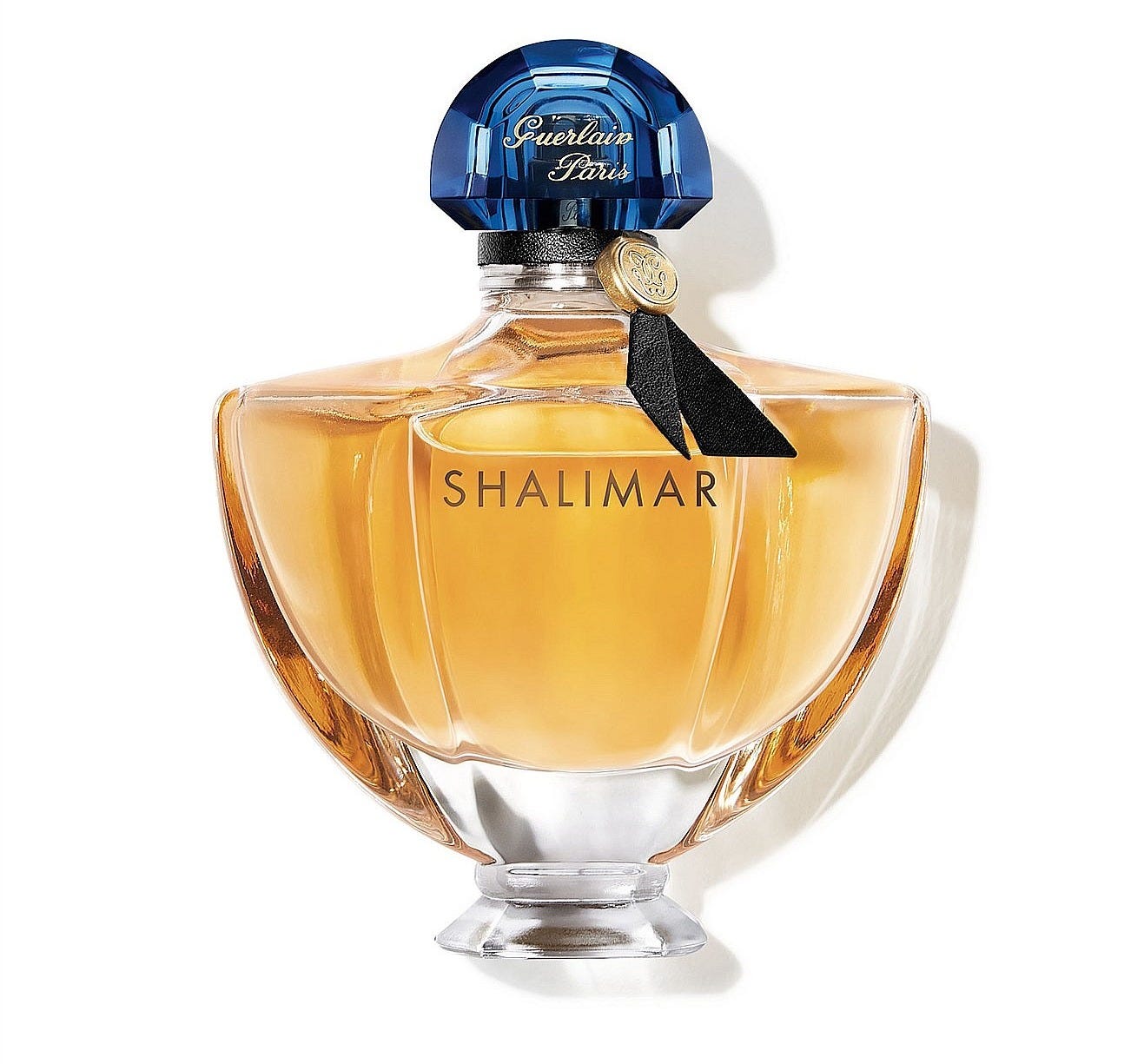
The Vanille Planifolia Extrait 21 extract, concentrated at 30 percent, is, in a way, the fullest realization of Shalimar: Guerlain’s signature invention, whose Art Nouveau–inspired, Baccarat-manufactured bottle was designed by Raymond Guerlain. The 1925 icon, worn by the likes of Brigitte Bardot and Frida Kahlo, was one of the first to employ the help of ethyl vanillin. Vanille Planifolia Extrait 21, though, wants nothing to do with the world of the synthetic, making it an even more delectable, unadulterated addition to your collection (and well worth that $515 price differential). (x)
So, here’s the thing.
In a world that is increasingly flooded with artifice, I understand the instinct to want raw, natural materials in your perfume. I get it. In the murky half-world of our imaginations that is what we expect perfume to be, the same way we imagine a guy at a perfume organ mixing potions and extracts and essential oils. There’s an element of the magician about it all - not helped by videos of Thierry Wasser hamming it up with Mona Kattan as he evangelises about the purity of the vanilla tincture on your instagram feed.
The magic dies a little bit as soon as you bring in lab coats and c02 extracts and terpenoids and fatty aldehydes. I get it. I do.
But vanilla is one material that should almost always be synthetic in perfumery, in my opinion. The ethics around its harvesting are murky at best, there is such huge demand for the raw material for culinary purposes (where its effect is much greater), and, crucially, they’ve been using the fake stuff for a hundred fucking years and no one has ever really cared before.
Shalimar uses vanillin. The Guerlinade uses vanillin. Everyone uses vanillin because it’s cheap and it smells great and you can build a damn good amber or cola or gourmand accord with it. Don’t fix what was never broken.
I don’t think it makes a substantially better perfume to use natural vanilla. In fact I think that an overdose of naturals leads to a kind of laziness in modern perfume houses. In letting the natural material shine they abandon the old art of balancing natural and synthetic materials to create a new whole. That’s what makes Shalimar a work of art and a great perfume, and the lack of it is what makes Vanille Planifolia Extrait 21 a soulless thousand dollar waste of a vanilla orchid.
However. Something about Vanille Planifolia is resonating. The bottles, however pricy, are flying off the shelves. The ‘organic’ online following of the fragrance lead Guerlain to launch their first paid influencer advertising campaign. The article, as all depressing coverage of influencer culture is wont to do, lists out accounts you have never heard of and includes their instagram and tiktok follower counts straight after, as if this is good enough reason to believe them when they tell you to buy a thousand dollar perfume.
At the start of the year I gave myself a mission to detox from social media, and it’s mostly worked. I’m barely on the apps and when I am, I try to keep perfume content off my normal feeds (I have secondary accounts to follow perfume content, from the days when you only really find fragrance voices on youtube).
But even for someone who tried to specifically avoid perfume videos, Vanille Planifolia bled through to me. Influencers and accounts who barely post about perfume would be showing up in my feed unboxing little coffret boxes of the three Extrait perfumes, dabbing Vanille Planifolia on their wrists and gushing about how she’s ‘un-dupeable’.
This is a recurring theme in the artificial world of Vanille Planifolia content, a buzzword. Undupeable. You can’t find another perfume just like this one. If you want to smell like the sexiest hottest most irresistible vanilla gourmand girlie in all the land, you’re just going to have to fess up and pay the thousand - if you can even get your hands on a bottle. The vanilla was hand pollinated. Cut with Jacques’ original knife.
You are Guerlain. We are begging you to pull yourselves together. You are the one perfume house in existence that could claim to have given more to the world of perfume than Chanel or Coty. You created some of the foundational texts of this art form. They get trainee perfumers to recreate your formulas in graduate schools.
You are Guerlain, for fuck’s sake. You don’t need to be doing this.
Having watched the decline and fall of this particular Roman Empire for many months I felt it imperative that I try and smell Vanille Planifolia on a recent trip to the city.
I figured that this would be one of those perfumes that the Guerlain salespeople, who are always dressed like flight attendants on a slightly suspect airline carrier, would guard with a lock and key. But there was a bottle of Vanille Planifolia sitting on open on the shelf, glimmering like a rhinestone, half empty, smudged with fingerprints. The thousand dollar demon. I walked up and sprayed it without any fuss.
What can I say about Vanille Planifolia Extrait 21? Well, it’s a vanilla. Like all rich things it takes its wealth as definitive and does not feel the need to develop any sort of real personality alongside the dollar signs. It costs a lot and is relying on the mindfuck of you knowing it is expensive to make you think it smells expensive. It doesn’t. It smells like vanilla.
It is, I will grant you, a very Guerlain vanilla. The brand excels in bringing sophistication and restraint to the saccharine world of the gourmand, more creme anglaise than vanilla cupcake. They do this by going back to the building blocks of the Guerlinade, a time in perfumery where accords and bases were the norm and not a rare and tragic exception in mainstream perfumery.
Thus Vanille Planifolia Extrait 21 could easily be labelled a tonka perfume, or an opoponax perfume, or - god forbid - what it is, which is an amber accord masquerading as a complete perfume and somehow getting away with it.
It’s a nice amber. If Guerlain couldn’t pump out a nice amber, we’d really be in the trenches. But is it the best thing you will ever smell? No. Is it noticeably a better quality or more artistic or more original perfume than Angelique Noire or Cuir Beluga or Shalimar or even the fifty thousand flankers and derivatives of Shalimar still kicking around Guerlain’s stable?
I think you know the answer to that.
I’ve talked about a lot of perfume on this Substack, perfumes I have loved and perfumes I’ve hated. But I don’t think I have ever said this before: don’t buy Vanille Planifolia Extrait 21.
Don’t buy it.
Don’t waste your time or your money on this sad excuse for a perfume. Don’t let the propaganda sway you. Go to the Guerlain counter and smell it. Then turn your head and smell Shalimar and Mitsouko and Samsara and Herba Fresca and Habit Rouge and Nahema. Smell Apres l’Ondee and Vol de Nuit and Spiriteuse Double Vanille. You could probably buy any two for the price of one Vanille Planifolia. You could probably buy three.
Jacques Guerlain built the greatest empire in perfumery on the back of plain synthetic vanillin, manufactured in a lab. It will take a lot more than a $900 perfume to undemocratise fragrance. I think you should pay $15 to take the train into your city and spend half a day smelling all the Guerlains for free. Take a friend with you. Spray the blotters and then take them home and slip them between the pages of books on your shelves.
Perfume is for you. It can, often, be free. You should take joy in this as frequently as possible.
The two types of people who can afford Vanille Planifolia are people who are so rich that money no longer has any value, and influencers who were sent a bottle for free. Let them keep it. Your time and your nose are better spent elsewhere.
Since I was hanging around the stand anyway, and the salespeople weren’t giving me trouble, I took some time at the Guerlain stand to revisit some old friends. Apres L’Ondee, Vetiver, L’Heure Bleue. They still take my breath away. In general I find nostalgia to be corrosive as a feeling. But when the modern releases from Guerlain are perfumes like Vanille Planifolia 21, are they giving us much choice?
I smelled Shalimar when I was there too, for old times’ sake. She must be on her hundredth reformulation, her thousandth, but she’s still got it: that lemon-bergamot opening that is screechy like cat-piss, the melange of rose-iris-jasmine that feels like it seeps into your pores, a bed of rolling, purring, molasses-rich amber that still hasn’t been matched nearly a hundred years later.
A hell of a perfume, that Shalimar. So deliciously overwhelming; so growlingly lush. A masterclass in the art of vanillin, the power of synthetics, and the world of the possible. It serves as a reminder that there is much to love about perfume. At the Guerlain counter, you will need it. ◪
Well you did it again, girl. You successfully made me read this aloud to my eldest son who smells like Gillette deodorant and Bounce fabric softener. And he laughed aloud at your paragraph about them tricking you into thinking it smells expensive by being expensive. Now I wanna do a Perfume Crawl downtown with blotters to tuck away for strategic placement among my underdrawers. Free smells! 🤩
Brilliantly written! Hard agree with the sentiment too, so utterly bored with Private Equity types selling heritage they don’t understand to the kids of other PE whores who understand only how much of daddy’s money they spent on the experience so it must be good.
I’ll keep buying fragrances from my favourite Bermudian and Somerset sources thanks.