

appetites
newsletter #66: cravings, clubs, cafes.

The coastline of my city is sentineled on each end by a set of historic ocean baths. These are completely free for anyone to use and open year round, though you take your life in your hands swimming there in the winter.
I try to swim in the ocean baths every morning, where I can. You have never seen a person look more ridiculous than me in my swim cap, waterproof headphones, goggles, zinc sunscreen, black swim shirt, black swim pants, and black swim shoes descending into the baths at six in the morning. But it’s good exercise, and it’s peaceful. I listen to the Cocteau Twins and watch the sun rise over the edge of the pool, flecked with sea foam and smelling like ocean salt and brine.
That’s the view when you look out over the water. If you turn your head back towards land, you see one of the most fearful sights in nature: the run club.
Rarely have I seen an invasive species take over society like this one. In Australia, with our fragile ecosystem, they have ripped across the cities like a medieval plague. On the coastal path from one ocean bath to another they flock, four or five shoulder shoulder across the beach path, wraparound glasses and rucking vests and the thunk-thunk-thunk of a hundred pairs of Hoka Cliftons.
Where are these people running from? What are they running to? Do they make funny shapes on their Strava maps? Do they keep a line of credit at lululemon? What does the run club give them that they cannot find?
Hovering with my chin above the waterline like the creature from the black lagoon, I watch the ebb and flow of the run clubs with fascination. As someone who always hated group sports and still has the occasional lucid nightmare flashback to high school beep tests, to me a run club does seem to be conjured out of one of Dante’s levels of hell. But I do like the low barrier to entry, and I’m told people really like the social aspect - though I can never tell if they’re talking while they run, or just before and after.
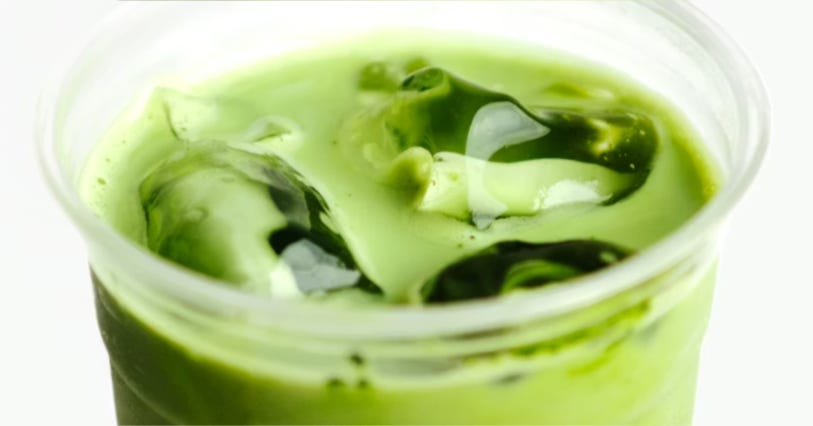
But the before and after seems to almost be the point of the run club. I ponder on this as I go back and forth, back and forth in the pool. All of the content I am fed about run clubs (in a laughable miscalculation by the Great Algorithm, proving there are parts me of that are unknowable still) seems to involve the clubbers starting or finishing their run clubbing at a cafe with a coffee, a pastry, a matcha.
This is a part of the ritual I can get behind, the same way I have always thought the most appealing part of skiing is being able to sit in front of a fire with a mug of hot chocolate at the end of the slope. The run-club-sweet-treat pipeline feels like a phenomenon that has snuck up on us all, the same way nobody cared about what protein they ate ten years ago and now we’re all buying vats of powdered whey in obnoxiously large canisters that don’t fit in our pantries.
When did this happen? How did we not notice it until it was too late? We can and must encourage the run club economy to continue so that the rest of us can enjoy the downstream sweet treats. With the world being what it is, a sweet treat matters now more than ever. If I don’t get an iced dirty chai with a vanilla-maple cold foam when I buy the newspaper on a Saturday morning, I don’t want to know what would happen.
There’s something strange going on here, some deep current in Western society that started flowing the day that instagram posted that first fateful photo. Now that human connection is mostly online the importance of performance, and appearance, has paradoxically skyrocketed in the collective psyche. The cognitive dissonance between the self in situ and the self online takes us all to some weird fucking places.
Have you ever had a moment where you were doing something and you thought, ‘I should post this on my stories,’ and then followed that up with the thought, ‘what the fuck?’. It has become second nature to us to perform our lives. There was a time, I am told, long before this one, when we did things and we didn’t post about them. Is your life real if it isn’t recorded somewhere? Are you real if you are not observed? Is anything genuine anymore, or are we all just content?
This psychological brew means that it makes total sense to join a run club, and post about it, to maintain a beautiful and healthy body, and post about it, and to end the run club by going to a cafe that sells picture perfect pastries and shamrock green matchas, and post about it. There are operas of punishment and reward, restraint and indulgence, beauty and fear, happening in the run club. Shakespeare in Salomons.
There’s a game I like to play called ‘what perfume would you wear to...’ where I try to think of the perfect kind of perfume you’d wear to any given situation. In the spirit of the best hypotheticals, it can lead down some ludicrous and delightful decision trees. You play the game like so:
What perfume would you wear to... a third date?
If you want to go back to your apartment together: Ma Bete or Musc Ravageur.
If you want to politely farewell and then quietly ghost in a week or two: any non-calone aquatic.
If you don’t really want to be there but fear confrontation and want them to ghost you and put you out of your misery: it’s your lucky night. Go ahead and wear the Sauvage.
It is one of my favourite games. But I might have found my toughest scenario yet: what perfume do you wear to run club?
There is an entire sub genre of conversations around the perfect gym perfume that I have mostly ignored out of sheer disinterest. The ones that are most recommended are what you’d expect, light and inoffensive citrussy things that you won’t feel bad about scrubbing off post workout, and that throw easily into a gym bag. But I just don’t think that’s good enough for the psychosocial manoeuvres happening in the run club.
Run club is about performance, and indulgence, and ambition, and sweat. Run club, I can only conclude, is the realm of the gourmand.
I know what you’re thinking: the absolute dead last place you’d want to be smelling like a cupcake is when you’re on kilometre five with the sand kicking in your eyes and your Garmin watch bullying you to go faster. This would be true for the solo runner, perhaps. But if you’re at run club you are there for the social element, which means the opinions of other people matters to you, which means you want to smell nice. You’re a nice, normal person getting up at 5:30 to run with twenty other nice, normal people, and you all smell like vanilla and cookies.
But underneath that, maybe truer than that, I think run club and gourmands are both about the same thing. They are driven into being from the same place, which is appetite.
There is little that is more political, more fraught, than our relationship with our own desire. It is profitable, and therefore exploitable, to play on people’s appetites. To eat, to indulge, to be seen, to be loved, to be accepted: craving is the human driver underneath almost everything we do.
When one appetite is suppressed - don’t eat the ultra processed foods, the refined sugar, you can’t have it unless you do the work to earn it - it shows up in other places. Go to run club; try the sugar free high protein dessert; wear the cupcake perfume. Feed your appetite in all ways but one.
The way scent and taste are woven together is a huge driver of this concept, gourmand-as-indulgence. But I have to be honest: I have never in my life worn a gourmand perfume and felt like it was an adequate replacement for a dessert. In fact, for my mind there is no correlation whatsoever between a sweet perfume and a sweet taste.
I’ve never worn a perfume that makes me hungry. I’ve never worn a perfume that makes me feel full.
But I see the appeal. The genre of the gourmand, like many fields that breed on imitation, has gotten more and more realistic over the past fifteen years. The abstraction of the genre - the way Angel’s patchouli-ethyl maltol sort of hinted at the idea of chocolate - has given way to ever more specificity. Now perfumers aim for specific types of sugar, subsets of desserts to recreate, burnt marshmallow and salted caramel and creme brulee.
There are now enough gourmand perfumes in the world that you could open an old fashioned candy shop and line the shelves with fragrance instead of sweets. God, you’d probably make a killing.
As is often true in the world of perfume, just because nobody is saying anything interesting through the genre of gourmands does not mean there is nothing interesting to say. I am waiting and waiting and waiting for perfumers to give the gourmand the intellectual rigour and artistry I believe it deserves.
I understand why they don’t. Compared to a fougere or an amber or a Spanish leather the gourmand feels so tacky, so noveau riche, so derivative of the early Guerlains and their vanillin-creme drydown that seems so elegant and restrained compared to the modern saccharine. The gourmand is pop art compared to the Impressionist masterpieces.
But the gourmand is the future. It is the whey protein of the modern perfume world, something that was always sort of around but has now been shuffled into the middle of the stage. They’re even making gourmands for men now, a leap forward for designer scents and their marketing teams akin to man landing on the moon. Noveau riche after all, is still riche. Gourmands need an Andy Warhol to make everyone else realise that they, too, can have profound things to say about the society they are built in.
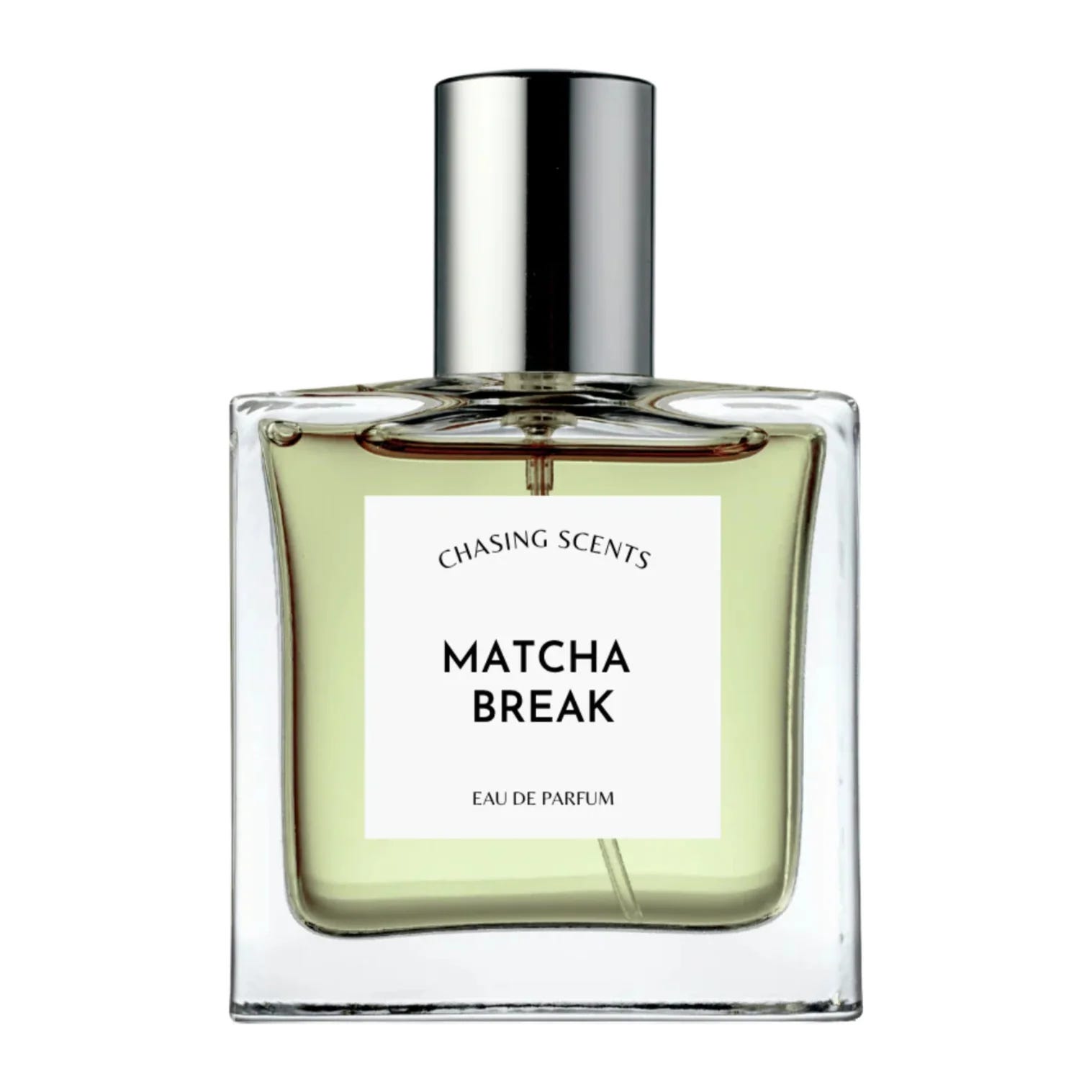
And there are perfumers out there who are taking the gourmand seriously. I’ve written before about the independent Australian brand Chasing Scents, who make some of the most remarkable tea perfumes on the market. I was in Sydney earlier this year and jumped on the chance to smell their newest creation, Matcha Break.
Though I will be a coffee person until the day I die, I am also fond of an iced matcha from time to time. This was a love I had to wean myself into - I think the first few cups of matcha anyone ever drinks always take a little bit like hot grass. But there was a time I didn’t like coffee either, and there was enough interest for me in the earthy-damp taste of matcha to have me going back for more. Now I love the stuff precisely because of its bizarre grassy taste, its thick foamy powderiness that clings to the tongue, how it both tastes distinctly of tea and also not like tea at all.
Matcha is a funny thing. It is such a bold flavour and yet so easily overtaken by any additives: I’ve ordered many strawberry matchas that tasted like less like matcha and more like off-brand Nesquick. Similarly, every matcha branded perfume I’ve smelled seems to have waved its hands vaguely in the direction of something green before descending into a sugary, milky mess.
But I knew that if any brand was going to crack the code of matcha in perfume, it would be Chasing Scents. The brand creates its own tea extracts which give their perfumes an intensity and realism that I’ve never smelled elsewhere in artisan perfumery. And Matcha Break did not disappoint.
It is freakish how realistic of a matcha smell is living in this perfume. You almost think for a moment that someone got the finely powdered green stuff and dissolved it straight into the bottle. That earthy, grassy, slightly bitter smell of matcha enfolds you so precisely that you look at your wrist and can almost see matcha bubbles in the thick green foam.
On a cafe menu Matcha Break would be a vanilla matcha, milky cool and just the right pitch of sweet. And the classic Chasing Scents powdery-floral accord in rumbling around here too, just in case you think this is a two dimensional gourmand and not a ‘proper’ perfume.
The key to a great gourmand perfume is the same as with any other genre, and that is balance. It’s just harder to find in this style, because its entire existence is built around an overdose of sweetness. The trick to a balanced gourmand does seem to lie in hyperrealism: instead of hinting at a fruity note, if the perfumer spends time in bringing the full complexity of a culinary note into a perfume the simplicity of the sweet notes are balanced out by the rest of the perfume’s complexity. This is the genius of Matcha Break. It is not a sweet perfume, it is a tea perfume, and the gourmand notes are part of its greater harmony.
About an hour after I had sprayed Matcha Break, I found myself wandering around the shopping precinct without any real destination. Every shop seemed unappealing, and yet there was a buzzing underneath my skin, an itch to go somewhere, to do something. I get this feeling sometimes, insistent enough that it can’t be ignored and yet vague enough that I don’t know what I want. It mostly ends in me being annoyed with myself.
I wasn’t hungry, was the thing. I knew I wasn’t hungry. And yet I ended up in a cafe anyway, ordering a salted caramel macchiato. I stood waiting for it wondering why on earth I had ordered it. At any given time in my day you could never accuse me of being under caffeinated, but it was almost a feeling like that, like I wanted something to scratch an itch. Like there was a craving inside me, unnamed and unslaked, and it wanted me to consume.
It was only when I was lifting the macchiato to my mouth and my wrist came closer to my nose that it clicked. Matcha Break was getting under my skin, into my pores, making me want. It was feeding my appetite, stoking it, humming along in the part of my brain when taste and scent collide and confusing it enough that the message that came out on the other end was go to a cafe, I don’t know why. And the animal inside of me did as it was told.
And for the first time in my life, I wondered if the reason that perfumery hasn’t explored the world of hyperrealistic gourmand notes is that it could cause widespread panic in society. Our brains aren’t smart enough to handle this. Our appetites aren’t leashed enough to live in the Alice in Wonderland world where you eat and eat and eat and never be full.
Is this how people feel, I wondered, as I sipped my overpriced coffee, wearing their tobaccos and their vanillas and their strawberry milkshake marshmallow parfaits? For the first time my perfume had strayed from the realm of the intellectual into the murkier grounds of base instinct. I’ve worn perfumes that made me feel happy, and queasy, and curious, and sad. Was it so different that this one had stoked a craving? Or was I so unsettled because the constant noise from social media, and societal expectations, and the nutritional labels in the supermarket, and so much advertising from the time I was a child was trying to manipulate and control my desires, my appetites, that adding a perfume into the contention felt like one straw too many on an already heaving haystack?
And even then I thought, there could be an article here. Because nothing is real unless it’s observed. Because it’s all content, and no one is immune.
I don’t know if I like myself, when I wear Matcha Break. I don’t know if I can wake up every morning and face the craven hungry thing I really am underneath the rest of it. Blood and flesh and need, need, need.
Look at what a gourmand can do.
Matcha Break is a hell of a perfume. Will it satisfy your cravings or sit like a frog-green smoke over your empty stomach? I don’t know. I think that depends on your own appetite, on your own relationship to your desires. Matcha Break is sweet, but not too sweet. Sweet enough. It could indulge a craving, make you a friend, feed an addiction. A perfume for a long run, and for the cafe after. ▧
As always: god, your writing is such a delight to read. 👏🏻👏🏻👏🏻
Somehow, while talking about perfume, you talk about everything. 🍵